

What I'm building
Some of the systems in progress at Gnomai, and the range is wide: research and evidence tools, agent systems and more. Some bring practical, more immediate benefits; others are more experimental and build skills that carry into everything else. Ethics, governance and alignment are at the forefront of how we build every one of them. Each line describes what a system is being built to do, not an offer, a timeline, or a claim about what it will eventually do. I'd be happy to discuss or collaborate on any of them.
Research and evidence tools
Gnomai's own research and evidence workspaces, several of them local-first, put sourced citations at the center. Each is built to be modular, scalable and model-agnostic from the start, so it can grow and change AI models when it needs to. That is a goal more than a promise: today's tools still set limits, and we say so where they do.
Gnomai Terminal
A research workspace for U.S. stocks, meant to do much of what people pay Bloomberg or Koyfin for: linked panels for prices, company fundamentals, SEC filings and the economic backdrop, with every number showing where it came from.
The goal is that coverage without their cost or their privacy trade-offs: it runs on your own machine, so your research stays yours. Those platforms have large teams and large subscription fees. Terminal was built by one person working with AI tools for next to nothing, and its screener, portfolio view and source-checked research workflow already cover a good part of the ground.
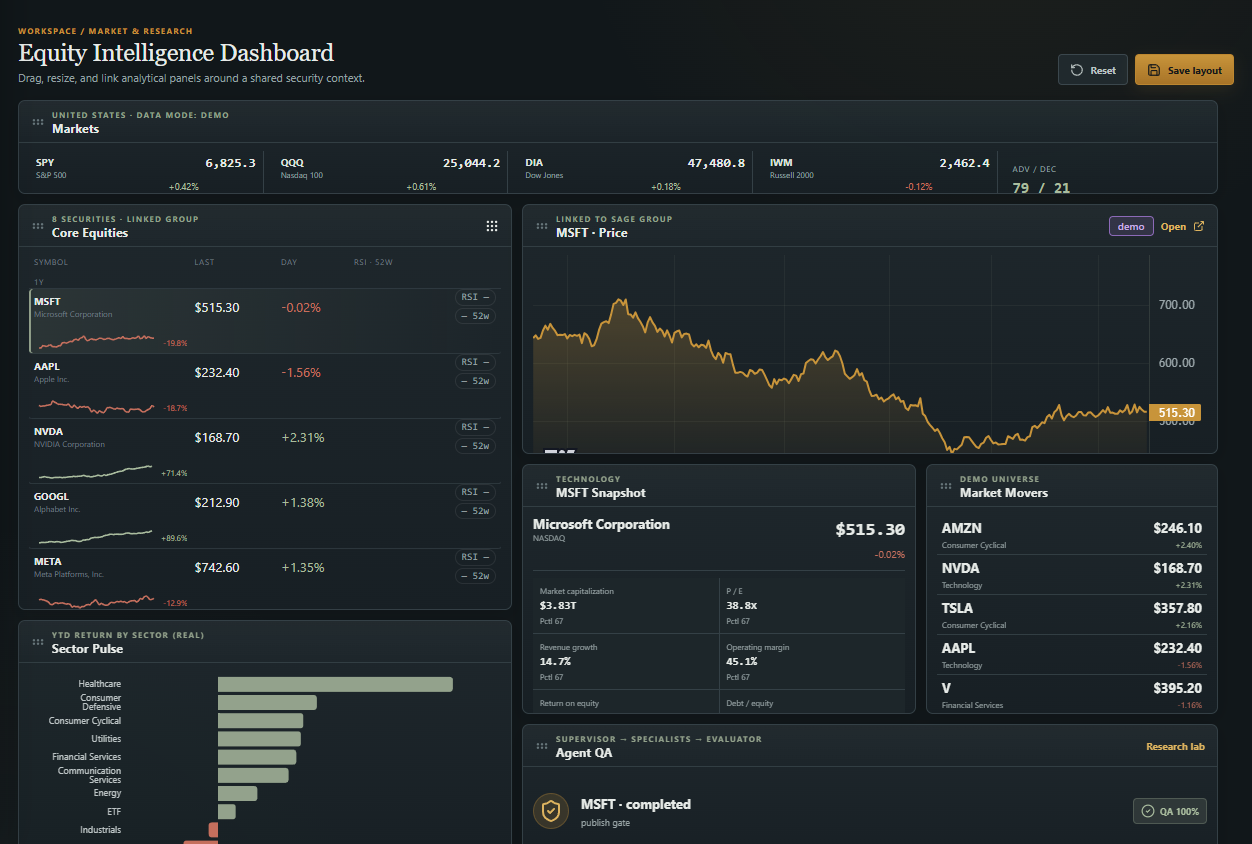
Earlier working interface in demo mode; market figures shown are sample data.
Gnomai Impact
A workspace for the people who run nonprofits and the boards that oversee them: financial health, funding, governance, programs and the decisions in front of the board, in one view, with every figure traced to its source.
It reads public IRS filings to answer the questions a board actually asks, such as how healthy the organization is, how much it depends on a few funders and what the evidence says about its programs, without boiling the work down to a single score.
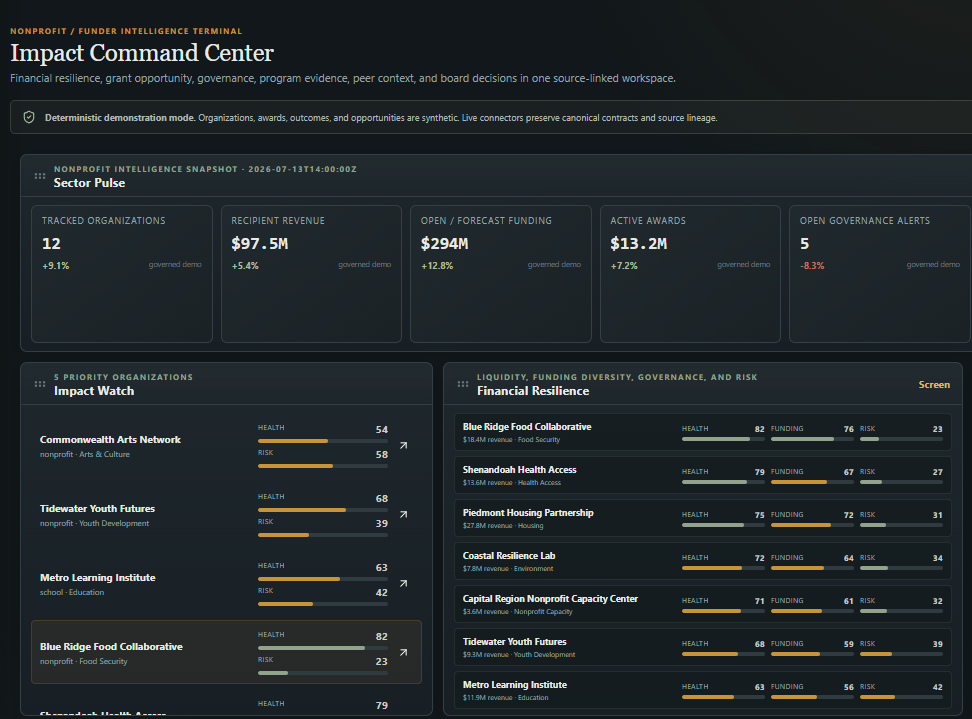
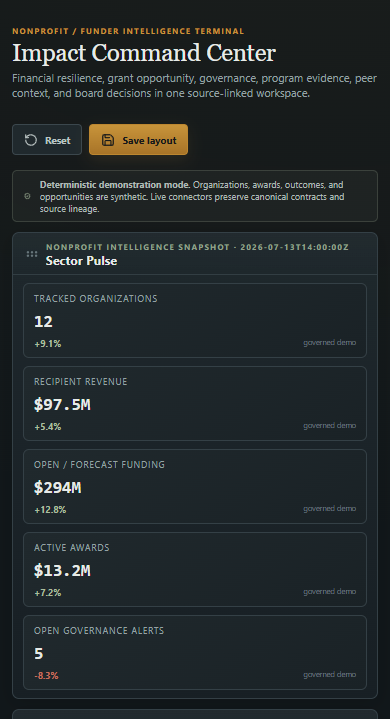
Earlier demonstration design; the organizations and figures shown are synthetic.
Gnomai AI Cartographer
A guide to the open AI world for people deciding which model to use. Pick a model and one page tells you whether its license allows what you have in mind, whether it has known security problems, how it scores on tests and whether it will run on computers like yours. It is meant to keep a small team from building on a model it can't legally use, can't trust or can't run.
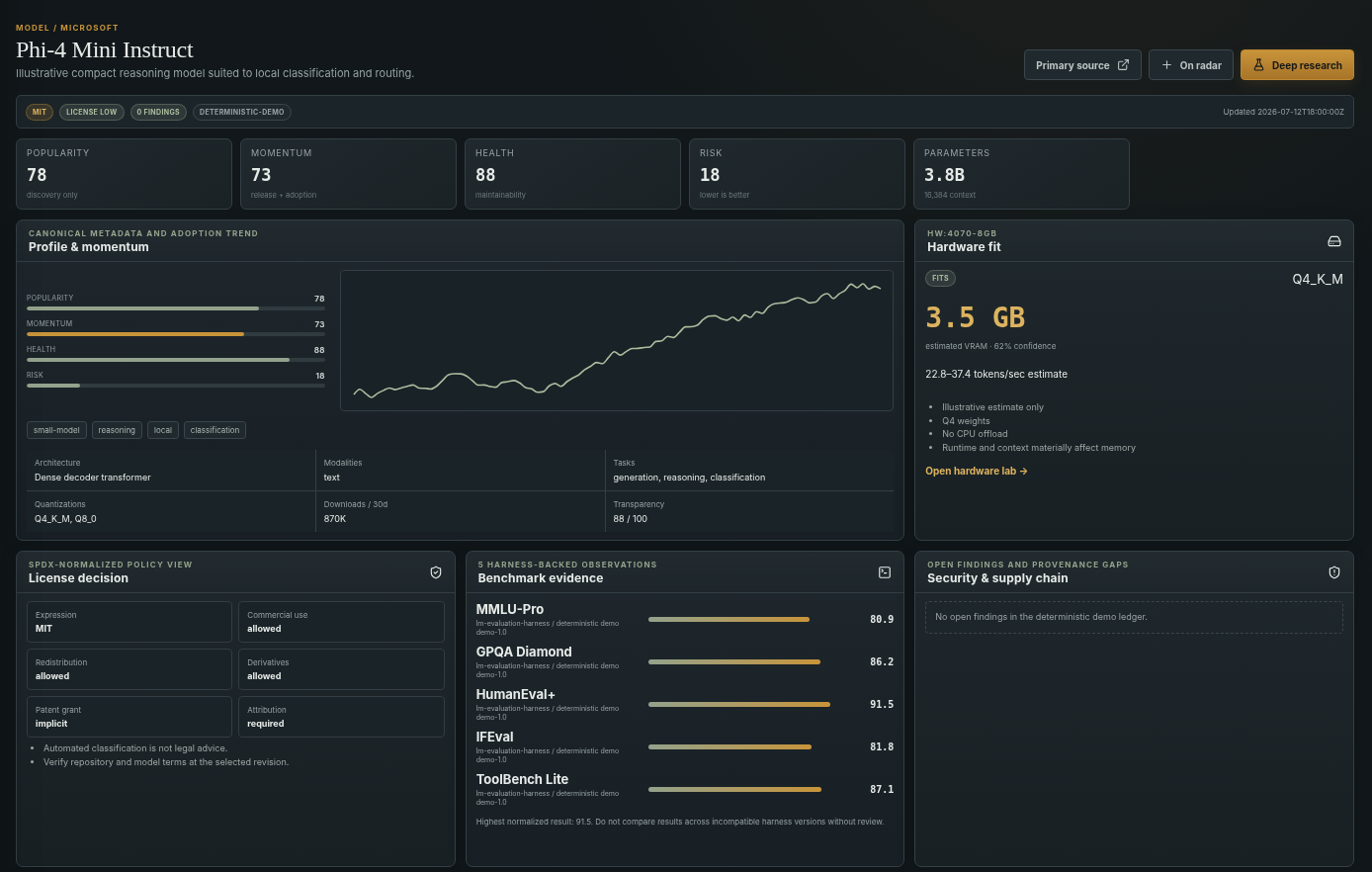
A model's profile: license, security record, scores and which machines can run it, side by side.
Phenomenon by Gnomai
An evidence archive for unexplained events and the research around them. Each case record separates what is established, what was measured, what is only claimed and what is still unresolved, and every statement points to the source document it rests on. Nothing is overwritten: each change is kept as a new version.
It holds UAP cases such as Roswell in 1947, Rendlesham Forest in 1980 and the Navy's FLIR, GIMBAL and GOFAST videos, alongside psi research such as presentiment studies and the Global Consciousness Project. Every quotation is checked against the source it came from, and two AI models from different makers read the documents separately; the page says where they agree and where they don't.
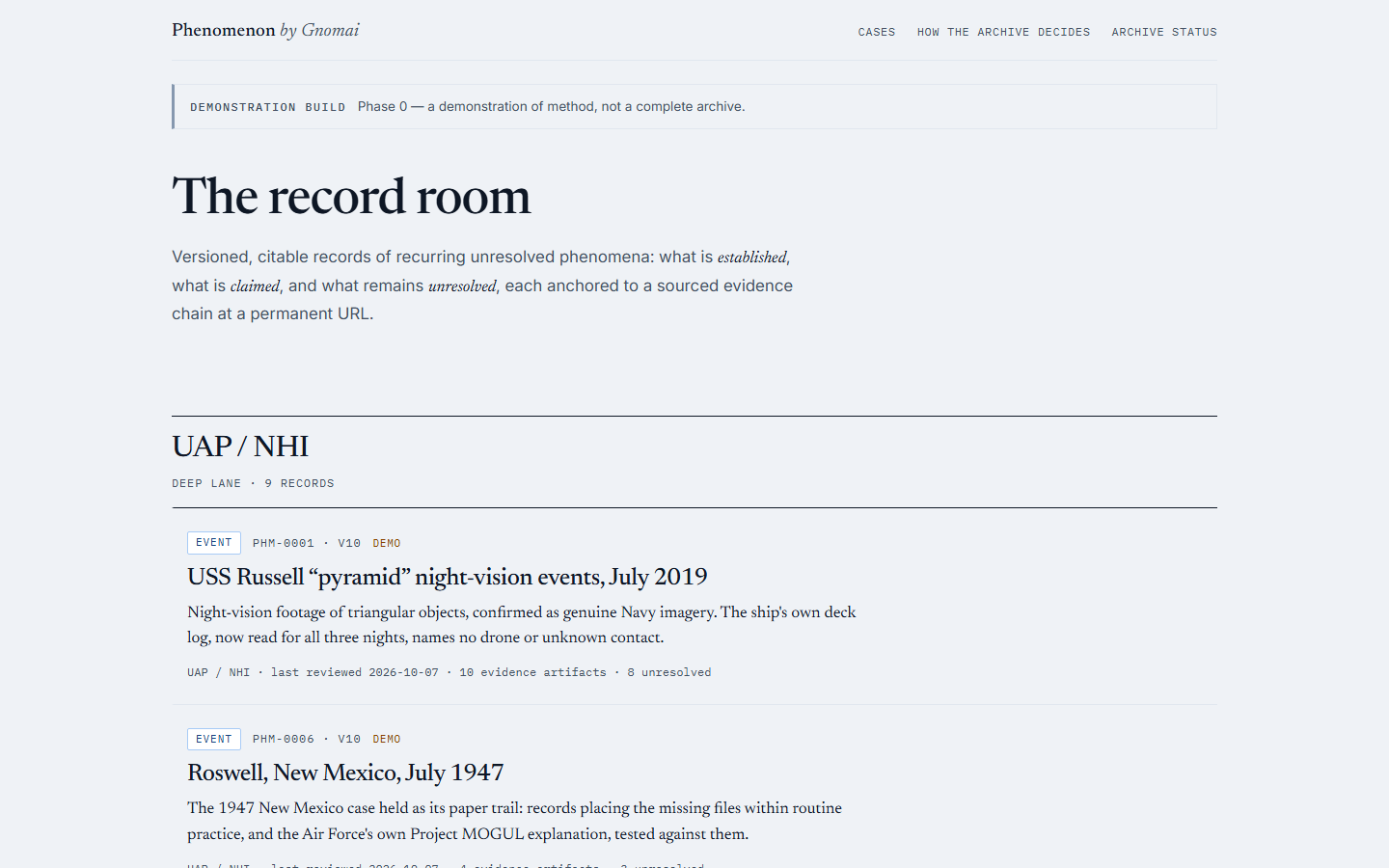
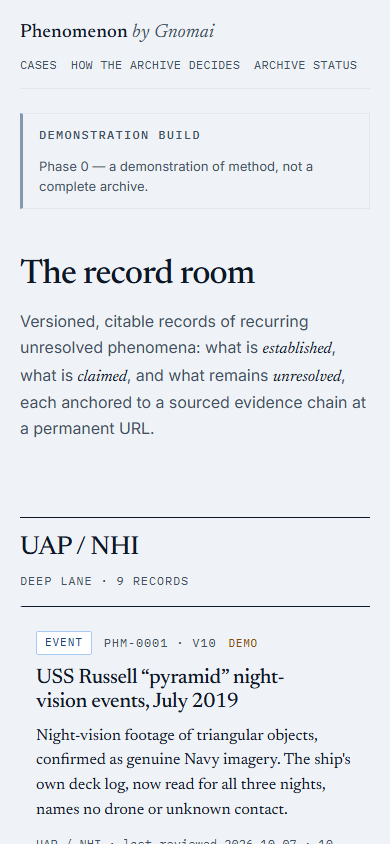
The home page today, a demonstration build: UAP cases first, with the psi research records further down.
Also in progress, no screenshot yet
Gnomai Scholar
A research tool for keeping up with fast-moving science: AI, physics, biotech and medicine. Scholar does for new research what Phenomenon does for unexplained cases. It tracks what changed, what supports each judgment and what is still unproven, so you can see where a field really stands and find the next useful question. It gives you the evidence and the open questions, not rankings or predictions.
Gnomai Radar
A research tool for finding the local businesses most likely to benefit from help, and showing why. It brings together what is public about each one (its website, the technology it runs on and its market) and explains the fit, so a consultant or agency spends its time on the right conversations. A person approves every outside step.
Gnomai Sightline
Gives a small business or nonprofit one clear, prioritized list of what to fix online: website speed, search basics, mobile, the booking path, the Google profile, reviews and how it shows up in AI search. Simple fixes come with ready-to-paste code, so an owner can act on the report the same day.
Design Sentinel
Built to catch what breaks while a website is still being made, before a visitor ever sees it. Each page is checked at phone, tablet and desktop sizes, every problem comes with the evidence, and a new version can be held against the last approved one down to the pixel. Measured facts stay separate from anyone's taste, including an AI's, so the fixes are about what is broken, not opinions.
Undertow
Finds the topics people in a field care about that the mainstream hasn't covered yet, gathers the sources and drafts a checked, labelled newsletter issue, so a writer or content team can get to a subject before it's crowded. A person approves every issue before it goes out.
Grant Scout
Helps a small nonprofit find the federal grants worth applying for. It screens and scores the fit, re-checks every deadline against the official listing and drafts a letter of inquiry from the organization's own documents only, saving hours of searching and the risk of a missed deadline. A person approves before anything is final.
Grant Scout and Gnomai Impact work as a pair: Impact shows a nonprofit where its funding stands, and Grant Scout finds the next grants to fill the gaps.
Weatherglass
Shows where interest in a subject is rising faster than anyone is covering it, from public signals on Hacker News, Wikipedia, GitHub, Hugging Face, Bluesky and YouTube. It helps a creator or product team decide what to make next, and says "not measured" rather than guess.
Counter-Model
Checks whether a financial model's story holds up against its own math before anyone acts on it. It is built to rebuild the spreadsheet's calculations independently and test the assumptions and scenarios behind the results, to find fragile conclusions and hidden formula errors. Code does the math, AI helps ask the questions and explain the findings, and a person reviews every result.
Evidence Auditor
An audit engine for the records an organization already keeps. It tests spreadsheets and data exports field by field against your rules and returns a review-ready packet: the evidence behind every flag and the questions a person still has to settle. Because the rules can be swapped, the same engine could check grant files or a month of transactions. The judgment stays with the reviewer.
Conviction Monitor
An early-warning system for investment theses, built to watch the public market data a view rests on, from rates and credit spreads to volatility, oil and the dollar, and to flag when that ground has moved enough to revisit the view. Every reading is kept exactly as it arrived, so a change of mind traces back to the numbers, not to the story told afterward.
Counter-Model checks the math inside a financial model and Evidence Auditor checks the records behind it; Conviction Monitor watches the market outside it, so together they cover a view from the spreadsheet to the world it depends on.
Agent systems
We're developing agents for all sorts of jobs; the ones here are the practical ones. Each covers a task end to end, from the first step to the final record, with checks and human review built in.
MeetingOps
Built to prepare for a booked meeting. It reads the booking, looks up the contact, classifies the meeting, and drafts the confirmation email, internal prep tasks and a team summary. Each piece is checked by validators, and anything outbound waits for review.
Personal Data Removal Agent (Varys)
Gets your personal information off data-broker sites, the companies that collect and sell names, addresses and phone numbers. It is built to work through a list of more than 700 known brokers: it drafts each removal request, waits for a person to approve, sends the requests, then re-scans to check the data stays gone. Every request is logged, so there is a record of what was asked and when.
Inbound Concierge
Built to handle a new enquiry from first contact to follow-up, connected to the calendar and the CRM. It qualifies the lead, sends a fast reply, finds a time and books the meeting, confirms it, logs the contact and every step in the CRM, sends reminders, records how the meeting went and asks happy clients for a review. Routing follows plain rules rather than an AI's guess, and it pauses for a person at each approval step. For a small service business that means faster replies, fewer no-shows and a client record that keeps itself up to date.
Prospecting Agent
Takes the repetitive work out of outreach. It researches a lead and its local market, checks it against the kind of client you want, writes a personal opening from wording you approve plus what it found, and lines each email up for a person to approve, edit or reject. Every step is logged in the CRM, so the pipeline stays current without manual entry, and nothing goes out without your say-so.
Inbox Unsubscribe Triage Agent
Clears the mailing lists out of a crowded inbox. It finds the senders that keep writing, shows how much each one sends, and unsubscribes from the ones you pick. When there is no one-click link, it can open the sender's page in a browser and click unsubscribe itself. Nothing happens until you approve it.